


How AI legal tools still fail to capture the human story
The Quiet Hum of the Digital Gavel
In the modern legal landscape, the air is thick with the promise of efficiency. We are told that algorithms can now predict judicial outcomes, that Large Language Models can draft complex briefs in seconds, and that data-driven insights can strip away the biases of the past. It is a seductive vision of a world where justice is a calculation and the law is a perfectly optimized code. Yet, as we sit in the quiet reflection of this technological revolution, a haunting question remains: in our rush to automate the process, are we losing the person at the center of the story?
At Just Mercy Film, we have long explored how the power of narrative defines the legal experience. Just as a profound cinematic work is more than the sum of its frames, a legal case is more than the sum of its filings. It is a tapestry of human choice, systemic pressure, and emotional resonance—elements that, so far, remain invisible to the most advanced artificial intelligence.
The Algorithmic Gaze: Efficiency vs. Empathy
AI legal tools are built on the foundation of pattern recognition. They scan millions of pages of case law to find the most probable path forward. On the surface, this is an invaluable asset for a defense attorney or a civil rights advocate. It saves time, reduces costs, and provides a framework for strategy. However, the algorithmic gaze is inherently backward-looking. It relies on what has happened before to determine what should happen now.
The limitation here is profound. Justice, in its most transformative sense, often requires breaking patterns rather than following them. It requires an advocate to look at a defendant not as a data point in a recidivism algorithm, but as a human being with a unique, unrepeatable history. AI can summarize a deposition, but it cannot hear the tremor in a witness’s voice. It can cite a statute, but it cannot feel the weight of a mother’s grief in a crowded courtroom. These are not merely 'soft' details; they are the very substance of advocacy.
The Data of Suffering and the Texture of Truth
When we reduce a legal struggle to a series of inputs, we risk flattening the human experience. AI legal tools struggle with what we might call the 'texture' of a story—the nuances that make a case compelling to a jury or a judge. There are layers to human suffering and resilience that do not fit neatly into a spreadsheet. Consider the following elements that AI consistently fails to capture:
- The Context of Systemic Injustice: AI often internalizes historical biases present in legal data, viewing systemic failures as statistical norms rather than injustices to be corrected.
- Emotional Resonance: The ability to convey the 'why' behind an action requires a level of emotional intelligence that code cannot replicate.
- The Power of Redemption: Algorithms are notoriously poor at accounting for human growth and the capacity for change, often locking individuals into their worst moments.
- Cultural Nuance: The subtle ways language, heritage, and community shape a person's narrative are frequently lost in translation when processed by a machine.
Why Narrative Still Drives Justice
In the courtroom, as in filmmaking, the story is the primary engine of change. A lawyer is, at their core, a storyteller. They are tasked with taking a chaotic series of events and weaving them into a narrative that demands empathy and understanding. This is where AI hits a digital wall. AI can generate text, but it cannot craft a soul. It lacks the 'lived experience' necessary to understand the gravity of liberty or the sting of a wrongful conviction.
Reflecting on the legacy of civil rights litigation, we see that the most landmark victories weren't won by better data processing, but by better storytelling. They were won because an attorney was able to make a judge see the humanity of their client. They were won because the narrative of the case resonated with the universal human desire for fairness. When we rely too heavily on AI to frame our legal arguments, we risk producing 'fast content'—arguments that are technically correct but emotionally vacant.
The Intersection of the Screen and the Statute
There is a reason we are drawn to legal dramas on screen. We watch them not to see the filing of motions, but to witness the collision of human wills. We want to see the moment of realization, the flicker of doubt, and the eventual triumph of the human spirit over a cold, bureaucratic system. AI legal tools are the ultimate bureaucrats; they prioritize the system over the spirit.
As we integrate these tools into our legal practices, we must do so with a sense of caution. We must ensure that technology remains a servant to the story, not its master. An AI can help a lawyer find a needle in a haystack of documents, but it cannot tell the lawyer why that needle matters to the client's life. It cannot explain the courage it took for a whistleblower to come forward, nor can it capture the specific shade of hope that keeps a family waiting for justice for decades.
Final Reflections: Preserving the Human Heart
The future of legal advice and representation likely involves a partnership between human intuition and machine efficiency. But we must be careful not to let the scale tip too far. In an era where content is generated in milliseconds, the slow, deliberate work of understanding a human life is more radical than ever. We must remember that the law was made for people, not for the optimization of data.
At the end of the day, justice is a deeply human endeavor. It is felt in the gut and the heart before it is codified in a verdict. As we look forward, let us use our tools to clear the path, but let us use our voices—and our stories—to lead the way. Only then can we ensure that the legal system remains a place of mercy, and not just a place of mathematics.


How civil rights litigation is finally moving toward a more human narrative
The Weight of the Record: Beyond the Docket Number
For decades, the halls of justice have been paved with the cold, hard stones of precedent and procedure. In the realm of civil rights litigation, the process has historically been one of reduction. A person’s life—their struggles, their history, their very essence—is often distilled into a series of motions, affidavits, and case numbers. We have lived through an era where the legal system prioritized the 'clinical' over the 'visceral,' often losing the human heartbeat in the pursuit of technical compliance.
However, a quiet revolution is taking place. We are witnessing a profound shift in how advocates, judges, and the public perceive the pursuit of justice. Civil rights litigation is finally moving away from the sterile confines of the law book and toward a more human narrative. It is an acknowledgment that behind every landmark case is a breathing, feeling individual whose story deserves to be heard in its full, messy, and beautiful complexity.
The Dehumanization of the Legal Process
To understand where we are going, we must reflect on where we have been. Historically, the legal framework was designed to be objective to a fault. In the effort to ensure 'blind' justice, the system often blinded itself to the humanity of those it was meant to serve. In civil rights cases, this meant that the systemic traumas of poverty, racism, and institutional neglect were frequently dismissed as 'irrelevant' to the specific legal question at hand.
This clinical approach created a barrier between the law and the people. When we strip a person of their narrative, we strip them of their dignity. We turn a victim of systemic injustice into a mere 'plaintiff,' and a survivor of state-sanctioned violence into a 'subject.' This detachment has long been a hurdle for true social reform, as it prevents the empathy necessary for transformative change.
From Case Files to Character
The movement toward a human narrative begins with the realization that facts alone do not move the needle of justice; stories do. Modern civil rights attorneys are increasingly adopting the role of storytellers. They are no longer just arguing points of constitutional law; they are weaving tapestries of human experience that demand to be seen. This shift is not about emotional manipulation; it is about providing the necessary context that the law has ignored for too long.
When we look at the work of pioneers in the field—those who have fought against the death penalty or for prisoner rights—we see a common thread: the power of proximity. By getting close to the story, we find the nuances that a simple legal brief cannot capture. We see the influence of childhood trauma, the weight of generational poverty, and the resilience of the human spirit.
Why Narrative Empathy Matters in the Courtroom
The courtroom is often seen as a place of logic, but it is also a place of human psychology. Judges and jurors are not algorithms; they are individuals shaped by their own experiences and biases. A human narrative serves as a bridge, connecting the lived experience of the marginalized to the moral conscience of the decision-maker. It transforms a legal dispute into a moral imperative.
Key Elements of a Human-Centric Legal Strategy
As this shift continues, several key elements have emerged as essential for humanizing the legal process:
- Contextualizing the Individual: Moving beyond the 'incident' to explore the life history and environmental factors that shaped the person involved.
- Highlighting Systemic Failures: Showing that an individual’s struggle is often a symptom of a larger, broken system rather than an isolated choice.
- Building a Bridge of Shared Experience: Identifying universal human themes—fear, love, hope, and the desire for safety—that transcend legal jargon.
- The Power of Vulnerability: Allowing the client’s own voice to be heard, rather than speaking for them in a way that erases their agency.
The Influence of Media and the Arts
This evolution in the legal field does not exist in a vacuum. It has been deeply influenced by the way we consume stories in the modern age. Films, documentaries, and literature have played a vital role in priming the public consciousness for a more empathetic approach to justice. When we see a powerful cinematic experience that mirrors the reality of the legal system, it changes our expectations of what justice should look like.
These narratives remind us that 'mercy' is not just a legal concept; it is a human necessity. They challenge the notion that the law should be a rigid instrument of punishment and suggest instead that it could be a tool for healing and restoration. As the lines between advocacy and storytelling continue to blur, the legal profession is finding new ways to resonate with the heart of the community.
Conclusion: The Future of Advocacy
The shift toward a human narrative in civil rights litigation is a sign of a maturing legal system. It is an admission that the law is not an end in itself, but a means to protect the dignity of the human person. By embracing the power of story, we are not only seeking better legal outcomes; we are seeking a more profound sense of truth.
As we look forward, the challenge for advocates will be to maintain this momentum without losing the rigors of legal excellence. It is a delicate balance—the marriage of the mind and the heart. Yet, it is in this intersection that the most lasting changes occur. Justice, at its core, is a human story, and it is finally being told with the depth and compassion it has always deserved.

Why criminal defense representation is still about the power of human stories
The Narrative Core of Criminal Justice
In the world of modern filmmaking, we often talk about the power of a narrative arc—the way a protagonist overcomes insurmountable odds or the way a tragedy unfolds through a series of misunderstood choices. On this site, we’ve explored why intentional filmmaking and narrative pacing matter in cinema. But these elements aren’t just reserved for the silver screen. In my view, the most critical application of storytelling doesn't happen in a theater; it happens in a courtroom. Specifically, in the realm of criminal defense, the ability to weave a human story is often the only thing standing between a person and a lifetime of institutional erasure.
Just as certain storytelling techniques ensure a movie stays with its audience, a powerful legal narrative can leave a lasting impression on a jury's conscience.
We have a tendency to view the legal system as a giant, objective machine—a calculator where you plug in a statute, add a piece of evidence, and receive a verdict. But this clinical perspective is a dangerous myth. Criminal defense is, and should always be, an exercise in radical humanization. When we strip away the personal history, the trauma, and the context of a defendant, we aren't pursuing justice; we are merely processing paperwork.
The Dehumanization of the Modern Docket
The current state of the legal system often feels like an assembly line. Prosecutors and judges handle hundreds of cases a week, and in that volume, the individual is easily lost. The defendant becomes a 'file,' a 'charge,' or a 'repeat offender.' I contend that this linguistic shift is a deliberate, albeit perhaps subconscious, way to make the delivery of harsh sentences more palatable. It is much easier to imprison a 'case number' than it is to imprison a father, a victim of systemic neglect, or a person suffering from an undiagnosed mental health crisis.
This is where the defense attorney’s role as a storyteller becomes revolutionary. A defense lawyer is not just a technician of the law; they are the architect of a narrative that restores the defendant’s humanity. Without this narrative, the court is left with nothing but a cold set of facts that rarely tell the whole truth. Facts can tell you what happened, but they almost never tell you why, and in the pursuit of true justice, the 'why' is where the morality of the situation resides.
Why Advocacy Demands a Human Perspective
I believe that effective legal representation is failing if it only focuses on the technicalities of the law. While procedural errors and constitutional violations are vital tools, they are often the 'special effects' of a case. The heart of the matter—the part that actually moves a jury or a judge—is the human element. Here is why the story must remain at the center of the defense:
- Contextualizing Action: No crime happens in a vacuum. A human story provides the necessary background of environment, upbringing, and immediate pressure that led to a specific moment in time.
- Breaking the Binary: The legal system loves the 'good vs. evil' binary. Storytelling complicates this, showing that people are capable of both great harm and great redemption simultaneously.
- Mitigating Punishment: When a judge sees the trajectory of a life, they are more likely to consider rehabilitation over mere retribution.
- Challenging Implicit Bias: We all carry internal scripts about what a 'criminal' looks like. A specific, detailed human story is the most effective way to shatter those stereotypes.
The Narrative Gap in Courtrooms
There is a growing gap between the complexity of human life and the rigidity of legal statutes. We see this in mandatory minimum sentencing and 'three strikes' laws that refuse to look at the individual. In my perspective, these laws are a failure of the imagination. They assume that every person who commits a specific act is the same. By prioritizing the human story, defense attorneys fight back against this homogenization.
Think about the films that stay with us. They are the ones that force us to empathize with characters we might otherwise judge. This isn't 'manipulation'; it is an expansion of perspective. In a criminal trial, providing that perspective is a moral imperative. If the prosecution’s job is to zoom in on a single mistake, the defense’s job is to zoom out and show the entire landscape of a life.
Challenging the Good vs. Evil Binary
Our society has an obsession with clear-cut villains. It makes us feel safer to believe that 'bad' people do 'bad' things because they are fundamentally different from 'us.' But anyone who has spent time in the legal field knows that the line between the defendant’s table and the gallery is often thinner than we care to admit. The power of storytelling in criminal defense is that it forces the court to acknowledge this thin line.
I argue that the most successful defense strategies are those that make the jury see themselves in the defendant. This doesn't mean excusing the behavior, but it does mean understanding it. When we understand the sequence of events—the 'narrative pacing' of a person’s life—we move away from vengeance and toward something that resembles actual justice.
The Future of Defense is Personal
As we move into an era of data-driven policing and algorithmic sentencing, the need for human stories is greater than ever. An algorithm cannot understand grief. A database cannot comprehend the nuance of a split-second decision made in fear. The human story is the only thing that can check the power of an increasingly automated system.
Ultimately, criminal defense representation must remain an art form as much as a science. It is the art of memory, the art of context, and the art of empathy. Just as a powerful film can change our worldview in two hours, a powerful defense narrative can change the course of a life forever. We must never stop insisting that the people inside the courtroom are more than the sum of their worst mistakes.

Why Intentional Filmmaking Still Matters in an Era of Fast Content
We live in a time where content is produced faster than ever. Short-form video dominates social platforms, trends shift by the hour, and audience attention is treated like a scarce currency. In this environment, filmmaking could easily fall into a reactive pattern—quick, disposable, algorithm-approved. Yet true filmmaking isn’t about speed. It’s about intention, craft, and meaning.
Intentional filmmaking still matters because depth outlasts noise. When a film is built with purpose—where every frame, sound, and narrative choice supports a larger message—it resonates long after the screen goes dark. Fast content may win quick views, but intentional storytelling builds memory, emotional connection, and cultural relevance.
Depth Over Quantity
Fast content thrives on volume. Filmmaking thrives on refinement.
Intentional filmmakers understand that editing isn’t just cutting scenes—it’s choosing what must remain. Every decision serves clarity and emotional impact. The result is not just watchable—it’s meaningful.
Crafting Perspective, Not Just Entertainment
A film has the power to challenge beliefs, inspire empathy, and reflect society back to itself. That requires reflection, research, and careful creative decisions. Intentional filmmaking asks:
Why does this story matter?
Who does it speak to?
What truth does it reveal?
Fast content rarely allows space for those questions.
Emotional Investment Can’t Be Rushed
Human connection takes time. Characters must evolve, tension must build, and themes must unfold. Intentional pacing gives the audience room to feel—not just react. In a world conditioned for instant consumption, emotional storytelling becomes a quiet rebellion.
Artistic Integrity Still Has Value
Algorithms prioritize trends, not craft. But history remembers the works that were built with care: films that dared to slow down, challenge conventions, or explore complexity. Intentional filmmaking protects artistic integrity from being diluted by market speed.

The Audience Is Changing, Not Disappearing
Yes—attention spans are shorter. But audiences also crave authenticity, substance, and storytelling that respects their intelligence. The success of thoughtful cinema, documentary resurgence, and long-form streaming proves it. People aren’t tired of depth—they’re tired of shallow repetition.
A Future Built on Purpose, Not Pressure
Technology may accelerate production, but purpose will always define longevity. As filmmaking evolves, the filmmakers who think deeply, create deliberately, and prioritize meaning will shape the future—not those chasing the trend cycle.
Because when content fades, intentional films remain. They spark conversation, influence culture, and remind us that cinema is more than entertainment—it's an art form capable of changing how we see the world.

The Art of Narrative Pacing: Why It Matters in Modern Filmmaking
Pacing is one of the most overlooked elements of filmmaking — yet it’s one of the most powerful forces shaping how a story is experienced. The way a film unfolds determines whether audiences stay engaged, feel emotionally immersed, or disconnect entirely. In an era defined by shorter attention spans, streaming platforms, and on-demand content, pacing has become a strategic artistic choice rather than a purely structural one.
Why Pacing Defines Audience Engagement
Narrative pacing controls momentum. Too slow, and viewers lose interest. Too fast, and the emotional weight never lands. Masterful filmmakers understand that pacing isn’t just about speed — it’s about rhythm. The best films balance tension and release, silence and movement, intensity and stillness. When pacing aligns with narrative purpose, the story becomes immersive rather than mechanical.
Timing Emotion: Scenes That Breathe and Scenes That Hit Hard
Emotion needs space to develop. A powerful moment doesn’t resonate if the film rushes past it. Conversely, lingering too long can dull impact. Strategic pacing ensures emotional beats land with precision. Whether it's a pause before a revelation or a rapid escalation during conflict, timing directly affects how deeply a scene is felt.
Visual and Audio Rhythm: Editing as Storytelling
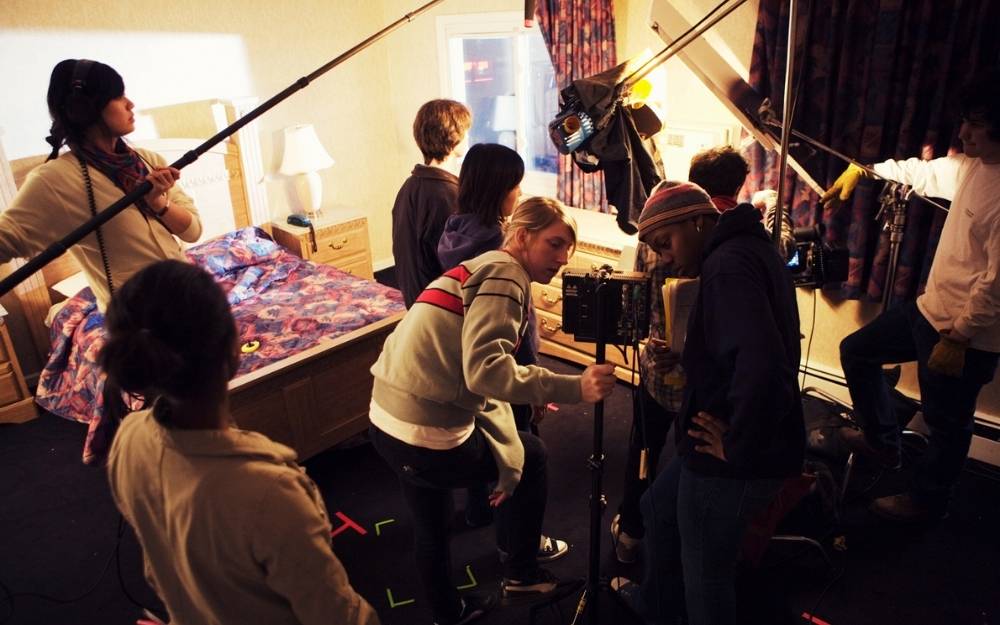
Editing style heavily shapes pacing. Quick cuts build urgency. Long takes create realism and introspection. Sound design, music cues, and silence all reinforce timing. Modern filmmakers increasingly use editing not just to structure scenes, but to evoke psychological response — influencing how the audience thinks, reacts, and absorbs meaning.
Pacing and Character Development
Strong pacing allows characters to evolve naturally. Rushing development feels artificial; dragging it slows momentum. The best films reveal personality and motivation gradually, through experience rather than explanation. Good pacing respects the audience’s intelligence — allowing them to discover rather than be told.
Genre and Intention: One Size Does Not Fit All
Thrillers thrive on acceleration and controlled pressure. Drama benefits from nuance and reflection. Comedy depends on timing and rhythm. The truth is simple: pacing must serve genre, tone, and message. Modern audiences are more discerning than ever, and pacing that supports intention is what maintains credibility and impact.
The Future of Pacing in Modern Cinema
Streaming culture has changed expectations. Binge formats allow longer, slower story arcs, while theatrical releases face the pressure of instant engagement. Filmmakers now must balance artistic depth with viewing behavior shaped by digital consumption.
But despite evolving formats, one principle remains unchanged: pacing is the craft that transforms storytelling from functional to unforgettable.
A well-paced film doesn’t just hold attention — it creates emotional immersion, narrative clarity, and lasting impact. When pacing is intentional, the audience doesn’t just watch the story. They experience it.

What Makes a Film Memorable? A Look at Storytelling That Lasts
Some films entertain. Others fade quickly. And then there are the rare few that stay with us — reshaping perspective, sparking emotion, and challenging what we believe. A truly memorable film doesn’t rely on spectacle alone. It resonates because it connects deeply with human experience, leaving meaning long after the credits roll. In a world saturated with fast content and constant distraction, timeless storytelling is still the foundation of powerful cinema.
The Emotional Core: Why Feelings Matter More Than Visuals
A great film hooks the audience emotionally. It doesn’t just tell a story — it makes people feel it. Whether through empathy, discomfort, joy, or sorrow, emotional engagement forms the bridge between viewer and narrative. When characters become relatable and their struggles feel real, the story earns emotional investment. That’s why authenticity, nuance, and vulnerability still outperform sheer visual spectacle.
Story Structure: The Invisible Architecture of Impact
Many unforgettable films follow classic narrative arcs — not because they’re predictable, but because they reflect human psychology. Rising tension, conflict, transformation, and resolution mirror the way we process events in real life. Purposeful pacing, intentional silence, and a steady rhythm allow audiences to absorb meaning, rather than simply consume scenes. When storytelling is structured with precision, the narrative becomes impossible to ignore.

Performance: When Characters Become Human
A film becomes memorable when performances feel lived-in rather than performed. Extraordinary acting elevates screenplay into truth. Facial expression, voice tone, hesitation, and emotional restraint all contribute to authenticity. Audiences may forget a plot detail, but they never forget a character who felt real.
Visual Symbolism: Meaning Beyond Words
Cinematography and symbolism deepen narrative impact. Lighting, color palette, framing, and camera movement shape emotion and theme. A meaningful visual choice can convey what dialogue never should. When every frame reflects purpose, a film becomes more than a sequence of scenes — it becomes a visual language.
Cultural Relevance and Moral Weight
Some films endure because they carry a message bigger than the story itself. They confront injustice, reveal truth, amplify unheard voices, or disrupt comfortable assumptions. When storytelling meets social reality, film becomes a catalyst for awareness and change.
Why Lasting Stories Still Matter
A memorable film lingers because it transforms the viewer. It offers reflection, perspective, and emotional connection long after the screen goes dark. In an industry where trends shift quickly, lasting storytelling remains the most powerful form of filmmaking.
When a film resonates deeply — not because it was seen, but because it was felt — it becomes more than entertainment. It becomes part of collective memory.